
Cefaclor (Monohydrate)
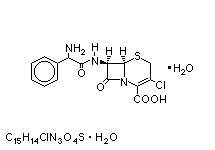
Cefaclor (Monohydrate) is a second generation cephalosporin antibiotic. Cefaclor (Monohydrate) is less effective against gram positive bacteria than first generation drugs. Cefaclor (Monohydrate) is effective in a large variety of bacterial infections, such as respiratory tract, ear, skin and urinary tract infections. Cephalosporins are derivatives of 7-aminocephalosporic acid and are closely related to penicillins in both structure and mode of action. Cephalosporin derived from fungus Cephalosporium. Cephalosporins have a six membered sulfur containing ring adjoining a ß lactam ring. Antibiotics require constant drug level in body for therapeutic effect. This is achieved by taking the medication at regular interval of time throughout the day and night as prescribed .Cefaclor (Monohydrate) is important to take the drug for the full time period as prescribed. If you discontinue the therapy, it may result in ineffective treatment.
Primary Characteristics
Cefaclor (Monohydrate) is also known as Cefaclor.
It is of Semi Synthetic origin and belongs to Cephalosporin.
It belongs to Peptidoglycan synthesis inhibitor pharmacological group on the basis of mechanism of action and also classified in Antibiotic, Cephalosporin-2nd Gen pharmacological group.
Molecular Weight: 385.5 · pKa: 8.03 · Solubility in Water: 1 in 100 · Non-proprietary name: Cefaclor (Monohydrate).
Pharmacokinetics
Absorption: Cefaclor (Monohydrate) has an oral bioavailability is 75% (±5%).
Distribution: Cefaclor (Monohydrate) has a volume of distribution is 0.37 l/kg. plasma protein binding is 24.7%.
Elimination: it is metabolised via 15%, plasma half-life is 29-60 min, renal excretion is major.
Advertisement
Indications
Cefaclor (Monohydrate) is primarily indicated in conditions like Arrhythmias after myocardial infarction, Bronchitis, Genitourinary tract infections, Otitis media, Pharyngitis, Pneumonia, Respiratory tract infections, Skin infections, Soft tissue infections, Tonsillitis.
Contraindications
Cefaclor (Monohydrate) is contraindicated in conditions like Hypersensitivity.
Dosage
Cefaclor (Monohydrate)'s dosage details are as follows:
| Dose | Single Dose | Frequency | Route | Instructions |
|---|---|---|---|---|
| Adult Dosage | ||||
| 500 mg | 500 mg | Every 8h | PO | |
| Paediatric Dosage (20kg) | ||||
| 7 mg/kg | 7 mg/kg | Every 8h | Oral | - |
| Neonatal Dosage (3kg) | ||||
| 7 mg/kg | 7 mg/kg | Every 8h | Oral | - |
Drug Interactions
Always consult your physician for the change of dose regimen or an alternative drug of choice that may strictly be required.
Side Effects
Cefaclor (Monohydrate) in overdosage may give rise to further complications which include Pseudomembranous colitis , Urticaria , Morbilliform eruptions .
Cefaclor (Monohydrate) produces potentially life-threatening effects which include Anaphylactic reactions. Careful monitoring is needed with proper medical management.
The signs and symptoms that are produced after acute overdosage of Cefaclor (Monohydrate) are Nausea, Vomiting, Diarrhea.
Cefaclor (Monohydrate) is known to cause more or less tolerable side effects which are usually transient. These include Diarrhea, Genital candidiasis, GI reactions, Nausea, Skin rashes, Vomiting .
Warnings / Precautions
Interference in Pathology
Cefaclor (Monohydrate) may interfere in the diagnosis of Abnormalities of AST(SGOT) and ALT(SGPT) values .
Available Brands
Click on a strength to view available brands.
Single Ingredient
Storage Conditions
Drug Classification
- 1.6.2.1.3 — Cephalosporins
Manufacturers
Manufacturers of Cefaclor (Monohydrate) in Pakistan: