
Glycine
Also known as: Aminoethonoic Acid, 2-Aminoacetic acid
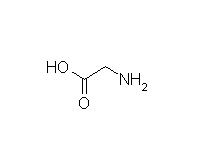
Glycine is the smallest of the amino acids, non-essential amino acid occuring as a constituents of many proteins. Chemically itaminoacetic acid. It is a glycogenic and participates in variety of synthetic reactions. Glycine is used with antacid in stomach hyperacidity, also with aspirin to reduce its stomach irritation.
Primary Characteristics
Glycine is also known as Aminoethonoic Acid, 2-Aminoacetic acid.
It is of Synthetic origin and belongs to Aminoacid.
Molecular Weight: 75.05 · Solubility in Water: 1 in 4 · Solubility in Alcohol: 1 in 1254 · Non-proprietary name: Glycine.
Pharmacokinetics
Elimination: it is metabolised via hepatic.
Advertisement
Indications
Glycine is primarily indicated in conditions like Bladder irrigation, Urogenital tract inflammation.
Glycine is also indicated for secondary conditions like Hyperacidity.
Contraindications
Glycine is contraindicated in conditions like Anuria.
Dosage
Glycine's dosage details are as follows:
| Dose | Single Dose | Frequency | Route | Instructions |
|---|---|---|---|---|
| Adult Dosage | ||||
| 1.5 % | 1.5 % | — | PO | as sterile solution of glycine in water as an irrigont. |
| Paediatric Dosage (20kg) | ||||
| No data. | ||||
| Neonatal Dosage (3kg) | ||||
| No data. | ||||
Drug Interactions
None recorded.
Side Effects
Glycine in overdosage may give rise to further complications which include Pulmonary toxicity , Cardiovascular toxicity , Hyperammonemia.
Glycine is known to cause more or less tolerable side effects which are usually transient. These include Electrolyte imbalance.
Warnings / Precautions
Available Brands
Click on a strength to view available brands.
Single Ingredient
Multi-Ingredient Combinations
Storage Conditions
Drug Classification
- 1.26.2.3 — Glycine preparations