
Lamivudine
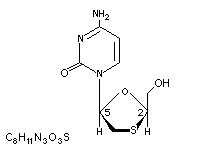
Lamivudine is antiretroviral approved for the treatment of advanced HIV infection. It may also be effective against other viral infections. Lamivudine is similar in structure to other nucleoside analogs such as zidovudine, zalcitabine, and didanosine. Although Lamivudine is initially effective as monotherapy, HIV resistance develops within 12 weeks. Combining it with zidovudine counteracts this resistance. It received priority review from the FDA and accelerated approval on November 17, 1995, for first-line therapy, in combination with zidovudine, of HIV infection. Preliminary data suggest that it may also be an effective alternative to interferon for the treatment of chronic hepatitis. Lamivudine is a potent reverse-transcriptase inhibitor. It has been shown to inhibit both type 1 and type 2 HIV reverse transcriptase. It can also inhibit replication of hepatitis B virus because this replication depends on reverse transcription of RNA to a minus-stranded DNA, which then serves as the template for synthesis of the plus-stranded DNA
Primary Characteristics
It is of Semi Synthetic origin and belongs to Cytosine.
It is classified in Antiretroviral Agent-Nucleoside pharmacological group. It is also classified under Antiviral Agents .
Molecular Weight: 229.3 · Solubility in Water: null · Solubility in Alcohol: null · Non-proprietary name: Lamivudine.
Pharmacokinetics
Absorption: Lamivudine has an oral bioavailability is 86% (±17%).
Distribution: Lamivudine has a volume of distribution is 1.3 l/kg. plasma protein binding is 36%.
Elimination: it is metabolised via Intracellularly, plasma half-life is 5-7 hr, renal excretion is 67(49-85)%.
Advertisement
Indications
Lamivudine is primarily indicated in conditions like Hepatitis B.
Lamivudine is also indicated for secondary conditions like AIDS, HIV infection.
Contraindications
Lamivudine is contraindicated in conditions like Hypersensitivity.
Dosage
Lamivudine's dosage details are as follows:
| Dose | Single Dose | Frequency | Route | Instructions |
|---|---|---|---|---|
| Adult Dosage | ||||
| 100 mg | 100 mg | Every 24h | PO | |
| Paediatric Dosage (20kg) | ||||
| 4 mg/kg | 4 mg/kg | Every 12h | Oral | |
| Neonatal Dosage (3kg) | ||||
| 4 mg/kg | 4 mg/kg | Every 12h | Oral | Not recommended under 3 month |
Drug Interactions
Always consult your physician for the change of dose regimen or an alternative drug of choice that may strictly be required.
Side Effects
Lamivudine in overdosage may give rise to further complications which include Hepatomegaly , Lactic acidosis.
Lamivudine is known to cause more or less tolerable side effects which are usually transient. These include Abdominal discomfort, Abdominal pain, Alopecia, Cough , Diarrhea, Fatigue, Fever, Headache, Malaise, Nausea and vomiting, Rashes , Respiratory tract infections.
Warnings / Precautions
Interference in Pathology
Lamivudine may interfere in the diagnosis of Elevation in ALT or AST.
Available Brands
Storage Conditions
Drug Classification
- 1.6.5.2 — Antiretroviral drugs