
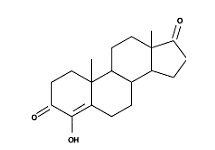
Formestane
Formestane used in the treatment of advanced estrogen dependent breast cancer.
Primary Characteristics
It is of origin and belongs to Androstenedione .
It is classified in Antineoplastic Agent, Aromatase Inhibitor pharmacological group.
Molecular Weight: 302.4 · Solubility in Water: null · Solubility in Alcohol: null · Non-proprietary name: Formestane.
Pharmacokinetics
Distribution: Formestane has a volume of distribution is . plasma protein binding is 85% .
Elimination: it is metabolised via , plasma half-life is , renal excretion is 1% .
Advertisement
Indications
Formestane is primarily indicated in conditions like Breast cancer.
Contraindications
Formestane is contraindicated in conditions like Premenopausal breast cancer.
Dosage
Formestane's dosage details are as follows:
| Dose | Single Dose | Frequency | Route | Instructions |
|---|---|---|---|---|
| Adult Dosage | ||||
| 3.571 mg/kg | 3.571 mg/kg | — | IM | Fortnightly |
| Paediatric Dosage (20kg) | ||||
| 0 – 0 | — | — | — | Not Recommended in this Age Group |
| Neonatal Dosage (3kg) | ||||
| 0 – 0 | — | — | Not recommended in this age group | |
Drug Interactions
Always consult your physician for the change of dose regimen or an alternative drug of choice that may strictly be required.
Side Effects
Formestane in overdosage may give rise to further complications which include Vaginal bleeding .
Formestane produces potentially life-threatening effects which include Anaphylaxis . Careful monitoring is needed with proper medical management.
Formestane is known to cause more or less tolerable side effects which are usually transient. These include Arthralgia, Bone pain, Hot flushes, Muscle cramps, Skin reactions.
Warnings / Precautions
Available Brands
None recorded.
Storage Conditions
Drug Classification
- 1.8.3 — Hormones and antihormones