
Tramadol (HCl)
Tramadol (HCl) is a centrally-acting analgesic with a unique, dual mechanism of action, within the CNS; it exerts agonistic properties at opiate receptors and interferes with neurotransmitter reuptake.Tramadol also binds weakly to µ-opiate receptors blocking the transmission of pain signals to the brain. It was originally thought that the drug had negligible abuse potential, but after its marketing, reports of drug abuse and withdrawal have been noted. The WHO guidelines indicate there is a place for tramadol in controlling moderate, but not severe, cancer pain.Tramadol has been effective in the control of post-operative pain, but is not suitable as an adjunct to anesthesia because of low sedative properties. Comparative studies with other analgesics for the treatment of postoperative pain indicate that tramadol is equivalent in potency to meperidine, one fifth as potent as nalbuphine, and one thousandth as potent as fentanyl. Respiratory depression caused by tramadol is less than that caused by morphine or meperidine but is apparent after overdose.
Primary Characteristics
Tramadol (HCl) is also known as Tramadol.
It belongs to Opioid.
It belongs to Amine uptake inhibitor pharmacological group on the basis of mechanism of action. It is also classified under Analgesics and Anti-inflammatory Agents .
Molecular Weight: 299.8 · pKa: 9.41 · Solubility in Water: readily soluble · Solubility in Alcohol: readily soluble · Non-proprietary name: Tramadol (HCl).
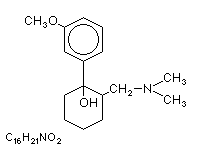
Pharmacokinetics
Absorption: Tramadol (HCl) has an oral bioavailability is 34% (±34%).
Distribution: Tramadol (HCl) has a volume of distribution is 2.7 l/kg. plasma protein binding is 20 %.
Elimination: it is metabolised via hepatic, plasma half-life is 6.3 hr, renal excretion is 30 % (unchanged) 60%(as metabolite).
Advertisement
Indications
Tramadol (HCl) is primarily indicated in conditions like Moderate to severe pain, Pain, Parkinson's disease; drug-induced extrapyramidal symptoms.
Contraindications
Tramadol (HCl) is contraindicated in conditions like Respiratory disease, Unconciousness, Acne rosacea.
Dosage
Tramadol (HCl)'s dosage details are as follows:
| Dose | Single Dose | Frequency | Route | Instructions |
|---|---|---|---|---|
| Adult Dosage | ||||
| 75 mg | 75 mg | Every 6h | PO,IV,IM | maximun oral dose is 400mg, IV injection given over 2 to 3min |
| 100 mg | 100 mg | Every 4h | Rectal | maximun oral dose is 400mg, IV injection given over 2 to 3min |
| Paediatric Dosage (20kg) | ||||
| 1.75 mg/kg | 1.75 mg/kg | Every 8h | Intra Muscular | - |
| 1.75 mg/kg | 1.75 mg/kg | Every 8h | Oral | - |
| 1.75 mg/kg | 1.75 mg/kg | Every 8h | Slow IV | - |
| Neonatal Dosage (3kg) | ||||
| 1.75 mg/kg | 1.75 mg/kg | Every 8h | Intra Muscular | - |
| 1.75 mg/kg | 1.75 mg/kg | Every 8h | Oral | - |
| 1.75 mg/kg | 1.75 mg/kg | Every 8h | Slow IV | - |
Drug Interactions
Always consult your physician for the change of dose regimen or an alternative drug of choice that may strictly be required.
Side Effects
Tramadol (HCl) in overdosage may give rise to further complications which include Seizures , Physical dependence.
The signs and symptoms that are produced after acute overdosage of Tramadol (HCl) are Coma, Respiratory depression, Shock, Respiratory depression.
Tramadol (HCl) is known to cause more or less tolerable side effects which are usually transient. These include Angioedema, Bronchospasm, Constipation , Diarrhea, Dizziness, Dry mouth, Headache, Nausea, Pruritus , Restlessness, SomnolenceX, Vomiting .
Warnings / Precautions
Available Brands
Storage Conditions
Drug Classification
- 1.2.2 — Opioid analgesics