
Aescin
Also known as: Aesculus, Aesculin, Aescul, Aesculinum
Aescin is an active principle of Aesculus. Aescin is used for the prevention and treatment of various peripheral disorders including haemorrhoids and post-operative oedema.
Primary Characteristics
Aescin is also known as Aesculus, Aesculin, Aescul, Aesculinum.
It is of Natural origin and belongs to Beta Escin.
It is also classified under Analgesics and Anti-inflammatory Agents .
Molecular Weight: 113.26 · Solubility in Water: null · Solubility in Alcohol: null · Non-proprietary name: Aescin.
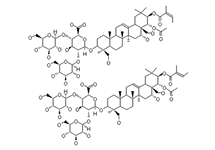
Pharmacokinetics
None recorded.
Advertisement
Indications
Aescin is primarily indicated in conditions like Hemorrhoids, Musculoskeletal disorders, Pain, Peripheral vascular disease, Post operative oedema, Rheumatoid arthritis.
Aescin is also indicated for secondary conditions like Diarrhoea.
Contraindications
Aescin is contraindicated in conditions like Renal impairment.
Dosage
Aescin's dosage details are as follows:
| Dose | Single Dose | Frequency | Route | Instructions |
|---|---|---|---|---|
| Adult Dosage | ||||
| 20 mg | 20 mg | Every 1h | IV | For the prevention and treatment of post-operative oedema. |
| 250 – 750 mg | — | Every 1h | PO | 3 divided doses |
| 1 – 4 ml | — | Every 8h | PO | Tincture |
| Paediatric Dosage (20kg) | ||||
| No data. | ||||
| Neonatal Dosage (3kg) | ||||
| No data. | ||||
Drug Interactions
Always consult your physician for the change of dose regimen or an alternative drug of choice that may strictly be required.
Side Effects
Aescin produces potentially life-threatening effects which include Renal failure, Anaphylaxis . Careful monitoring is needed with proper medical management.
The signs and symptoms that are produced after acute overdosage of Aescin are Paralysis , Vomiting, Diarrhea, Dilated pupils, Muscle twitching, Lack of coordination.
Warnings / Precautions
Available Brands
Storage Conditions
Drug Classification
- 1.2.5 — Antirheumatics, topical
Manufacturers
Manufacturers of Aescin in Pakistan: