
Atenolol
Atenolol is a competitive,ß-1 selective adrenergic antagonist, similar to metoprolol. ß-adrenergic antagonists counter the effect of sympathomimetic neurotransmitters (i.e., catecholamines) by competing for receptor sites. Similar to metoprolol, it, in low doses, selectively blocks sympathetic stimulation mediated by ß-adrenergic receptors in the heart and vascular smooth muscle. It antagonizes ß1 receptors at doses 50 to 100 times less than those required to block ß2 receptors. This cardioselectivty is more pronounced at low doses and is lost at high doses. It lowers the blood pressure in hypertension and slows the heart rate.
Primary Characteristics
It is of Synthetic origin and belongs to Phenylcetamide.
It belongs to Beta-1 adrenergic antagonist pharmacological group on the basis of mechanism of action and also classified in Beta Blocker, Beta1 Selective pharmacological group.
Molecular Weight: 266.3 · pKa: 9.6 · Solubility in Water: >1 in 100 · Solubility in Alcohol: >1 in 50 · Non-proprietary name: Atenolol · pH: 7.4.
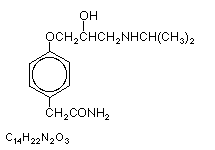
Pharmacokinetics
Absorption: Atenolol has an oral bioavailability is 22% (±22%).
Distribution: Atenolol has a volume of distribution is 0.5-1.5 l/kg. plasma protein binding is <5%.
Elimination: it is metabolised via via liver, plasma half-life is 6-8 hr, renal excretion is >90%.
Advertisement
Indications
Atenolol is primarily indicated in conditions like Angina, Angina pectoris, Cardiac arrhythmia, Early intervention within 12 hrs of myocardial infarction, Hypertension, Myocardial infarction, To prevent recurrence of neural tube defect.
Atenolol is also indicated for secondary conditions like Alcohol withdrawal, Migraine prophylaxis.
Contraindications
Atenolol is contraindicated in conditions like Asthma, Depression, Heart failure, Cardiogenic shock, Bronchitis, Second or third degree A-V block.
Dosage
Atenolol's dosage details are as follows:
| Dose | Single Dose | Frequency | Route | Instructions |
|---|---|---|---|---|
| Adult Dosage | ||||
| 2.5 mg | 2.5 mg | — | IV | At a rate of 1 mg/min |
| 150 mcg/kg | 150 mcg/kg | — | IV infusion | Over 20 minutes. Maintenance dose 50-100 mg. |
| 50 – 200 mg | — | Every 24h | PO | |
| Paediatric Dosage (20kg) | ||||
| 1.5 mg/kg | 1.5 mg/kg | Every 24h | Oral | - |
| 1.5 mg/kg | 1.5 mg/kg | Every 24h | Slow IV | - |
| Neonatal Dosage (3kg) | ||||
| 1.5 mg/kg | 1.5 mg/kg | Every 24h | oral | Gradually increase the dose |
| 1.5 mg/kg | 1.5 mg/kg | Every 24h | Slow intravenous | Gradually increase the dose |
Drug Interactions
Always consult your physician for the change of dose regimen or an alternative drug of choice that may strictly be required.
Side Effects
Atenolol in overdosage may give rise to further complications which include Bronchospasm , Hypotension , Agranulocytosis , Hyperglycemia , Impotence , Oculomucocutaneous syndrome, AV-block , Sinus bradycardia .
Atenolol produces potentially life-threatening effects which include Heart failure. Careful monitoring is needed with proper medical management.
The signs and symptoms that are produced after acute overdosage of Atenolol are Bradycardia, Convulsions , Coma, Ventricular asystole.
Atenolol is known to cause more or less tolerable side effects which are usually transient. These include Alopecia, Blood dyscrasias, Cold extremities, Constipation , Depression, Diarrhea, Dizziness, Dyspnea, Exfoliative dermatitis, Fatigue, Hyperpigmentation , Impotence, Insomnia, Paresthesias, Pruritus , Vivid dreams, Wheezing , Xerosis.
Warnings / Precautions
Available Brands
Storage Conditions
Drug Classification
- 1.12.1 — Antianginal drugs
- 2.12.2 — Antiarrhythmic drugs
- 3.12.3.1 — Beta blocking agents
Manufacturers
Manufacturers of Atenolol in Pakistan: