
Physostigmine
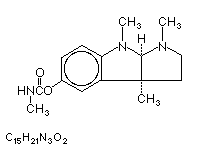
Physostigmine is alkaloid having the anticholinesterase activity, obtained from the dried ripe seed of Physostigma venenosum. The pharmacologic properties of it mimic those of acetylcholine. It increases intestinal and bladder motility. Physostigmine is used topically to reduce intra-ocular pressure (IOP) in glaucoma and parenterally to reverse the central nervous system effect produced by overdosage of anticholinergic drugs.
Primary Characteristics
It is of Natural origin and belongs to Alkaloid.
It belongs to Cholinestrase inhibitor pharmacological group on the basis of mechanism of action and also classified in Cholinergic Agonist pharmacological group. It is also classified under Antidotes .
Molecular Weight: 275.3 · pKa: 1.8, 7.9 · Solubility in Water: 1 in 1 - 90 · Solubility in Alcohol: 1 in 1 - 25 · Non-proprietary name: Physostigmine.
Pharmacokinetics
Absorption: Physostigmine has an oral bioavailability is 101% (±2.5%), pre-systemic (first-pass) metabolism accounts for 24% (±13%).
Distribution: Physostigmine has a volume of distribution is 15 - 75 litre.
Elimination: plasma half-life is 12 - 40 min.
Advertisement
Indications
Physostigmine is primarily indicated in conditions like Glucoma, Myasthenia gravis, Oversedation, Poisoning with anticholinergic drugs, Poisoning with antidepressant drugs.
Contraindications
Physostigmine is contraindicated in conditions like Anesthesia, Asthma, Diabetes mellitus, Neuromuscular blockade, Parkinsonism, Cardiovascular disease, Gangrene.
Dosage
Physostigmine's dosage details are as follows:
| Dose | Single Dose | Frequency | Route | Instructions |
|---|---|---|---|---|
| Adult Dosage | ||||
| 0.37 % | 0.37 % | — | Ophthalmic | As Required |
| Paediatric Dosage (20kg) | ||||
| 0 – 0 | — | — | Safety not established | |
| Neonatal Dosage (3kg) | ||||
| 0 – 0 | — | — | Safety not established | |
Drug Interactions
Always consult your physician for the change of dose regimen or an alternative drug of choice that may strictly be required.
Side Effects
Physostigmine in overdosage may give rise to further complications which include Convulsions , Hypertension .
Physostigmine produces potentially life-threatening effects which include Asystole . Careful monitoring is needed with proper medical management.
The signs and symptoms that are produced after acute overdosage of Physostigmine are Bradycardia, Respiratory paralysis, Salivation , Cholinergic crisis, Urination, Defecation .
Physostigmine is known to cause more or less tolerable side effects which are usually transient. These include Ciliary & conjnuctival congestion, Headache, Myopia , Ocular & periorbital pain, Twitching lids.
Warnings / Precautions
Available Brands
None recorded.
Storage Conditions
Drug Classification
- 1.21.4.1 — Miotics