
Nitrous Oxide
Also known as: Laughing Gas, Nitrogen Monoxide, Dinitrogen oxide
Nitrous oxide is a colorless, slightly sweet-smelling gas, which is non- irritant, stable and relatively inert at room temperature. Nitrous Oxide is a week anaesthetic, but strong analgesic.it depresses the central nervous system, in low concentration analgesia is the main feature; at higher concentrations, Nitrous Oxide is anaesthetic in susceptible individuals. Nitrous oxide was first use as an anesthetic in 1844, in the USA for the purpose of dental extraction and has remained in continous and very widespread use since the earlist days of anesthesia. Nitrous Oxide is usually given with atleast 30% oxygen.
Primary Characteristics
Nitrous Oxide is also known as Laughing Gas, Nitrogen Monoxide, Dinitrogen oxide.
It is of Synthetic origin and belongs to Oxides.
It belongs to Medical Gases pharmacological group on the basis of mechanism of action. It is also classified under General Anesthetics .
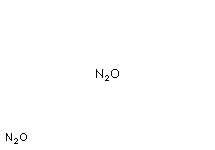
Molecular Weight: 44 · Solubility in Alcohol: freely · Non-proprietary name: Nitrous Oxide.
Pharmacokinetics
Elimination: it is metabolised via Gut, renal excretion is > 70 %.
Advertisement
Indications
Nitrous Oxide is primarily indicated in conditions like Analgesia, Analgesia without loss of consciousness, Dental caries, Maintenance of light anaesthesia, Pain, Surgical anaesthesia.
Nitrous Oxide is also indicated for secondary conditions like Dressing of burns and wounds.
Contraindications
Nitrous Oxide is contraindicated in conditions like Intracranial air, Tension pneumothorax, Air embolus.
Dosage
Nitrous Oxide's dosage details are as follows:
| Dose | Single Dose | Frequency | Route | Instructions |
|---|---|---|---|---|
| Adult Dosage | ||||
| 50 % | 50 % | — | Inhalation | Maintenance, mixed with oxygen |
| 70 % | 70 % | — | Inhalation | Initial, mixed with 30% oxygen |
| Paediatric Dosage (20kg) | ||||
| No data. | ||||
| Neonatal Dosage (3kg) | ||||
| No data. | ||||
Drug Interactions
Always consult your physician for the change of dose regimen or an alternative drug of choice that may strictly be required.
Side Effects
Nitrous Oxide in overdosage may give rise to further complications which include Peripheral neuropathy , Atonia .
Nitrous Oxide produces potentially life-threatening effects which include Aplastic Anemia , Granulocytopenia , Aplastic anemia. Careful monitoring is needed with proper medical management.
The signs and symptoms that are produced after acute overdosage of Nitrous Oxide are Hypoxia.
Nitrous Oxide is known to cause more or less tolerable side effects which are usually transient. These include Lack of concentration, Nausea and vomiting, Numbness , Paresthesias.
Warnings / Precautions
Available Brands
None recorded.
Storage Conditions
Drug Classification
- 1.1.1.2 — Inhalational anesthetics