
Naproxen
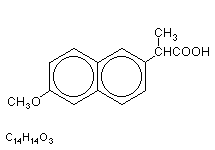
Naproxen is a nonsteroidal anti-inflammatory drug that also possesses antipyretic and analgesic properties. Chemically Naproxen is identified as (+)-6-methoxy-a-methyl-2-naphthalene acetic acid Naproxen is a propionic acid derivative related to ibuprofen, ketoprofen, etc. Many pharmacodynamic similarities exist among these agents, which are usually better tolerated than aspirin or indomethacin. It also has been shown superior to ergotamine in the treatment of migraine. It was approved by the FDA in 1976. The antiinflammatory effects of it may result from the peripheral inhibition of prostaglandin synthesis secondary to inhibition of the enzyme cyclooxygenase. Prostaglandins sensitize pain receptors, and their inhibition is believed to be responsible for the analgesic effects of it
Primary Characteristics
Naproxen is also known as Naproxen Sodium.
It is of Synthetic origin and belongs to Propionic Acid.
It belongs to Cyclo-oxygenase inhibitor pharmacological group on the basis of mechanism of action. It is also classified under Analgesics and Anti-inflammatory Agents .
Molecular Weight: 230.25 · pKa: 4.39 · Solubility in Water: < 1 in 10000 (>1in30) · Solubility in Alcohol: 1 in 25 · Non-proprietary name: Naproxen.
Pharmacokinetics
Absorption: Naproxen has an oral bioavailability is 100%, pre-systemic (first-pass) metabolism accounts for 2.5% (±2.5%).
Distribution: Naproxen has a volume of distribution is 0.9 l/kg. plasma protein binding is > 99 %.
Elimination: it is metabolised via extensive by Liver, plasma half-life is 12-17hr, renal excretion is 97.5 - 99 %.
Advertisement
Indications
Naproxen is primarily indicated in conditions like Acute gout, Acute spasm and spasm in diagnostic procedures, Differential diagnosis of acth-dependent cushing`s syndrome, Dysmenorrhoea, Fever, fever, Glaucoma, Headache, Migraine, Musculoskeletal disorders, Ocular hypertension, Pain, Rheumatoid arthritis, Surgical infections, Trauma.
Contraindications
Naproxen is contraindicated in conditions like Hypersensitivity reactions.
Dosage
Naproxen's dosage details are as follows:
| Dose | Single Dose | Frequency | Route | Instructions |
|---|---|---|---|---|
| Adult Dosage | ||||
| 375 mg | 375 mg | — | Maintanace,To a total maximum daily dose of 1250mg. | |
| 750 mg | 750 mg | — | For migraine ,At first symtoms of attach. | |
| 375 mg | 375 mg | Every 12h | PO | For Musculoskeletal disorder and Dysmenorrhea .Initially given 500 mg which is followed by 250 mg every 6 or 8 hr |
| 625 mg | 625 mg | Every 12h | PO | For rheumatic disease and chronic pain.It should be taken after food |
| 750 mg | 750 mg | Every 12h | PO | For Acute Gout .Initially given 500 mg which is followed by 250 mg every 8 hr |
| 500 mg | 500 mg | — | Rectal (supp) | For Musculoskeletal Disorder and Dysmenorrhea .1 suppository given at Bed time followed by 1 suppository in the morning. |
| Paediatric Dosage (20kg) | ||||
| 10 mg/kg | 10 mg/kg | Every 12h | Oral | 1 month to 18 years which may be increased to 10-15mg/kg twice daily. |
| Neonatal Dosage (3kg) | ||||
| No data. | ||||
Drug Interactions
Always consult your physician for the change of dose regimen or an alternative drug of choice that may strictly be required.
Side Effects
Naproxen in overdosage may give rise to further complications which include Hepatitis , Aplastic anemia , Hemolytic anemia , Aplastic anemia , Hemolytic anemia , Anaphylactoid reactions , Granulocytopenia , Nephrotic syndrome , Peptic ulceration , Acute renal failure , Nephritis , Hemolytic anemia, Breast cancer , Pseudoporphyria , Aplastic anemia, GI perforation.
Naproxen produces potentially life-threatening effects which include Gastric erosion and ulceration, Aplastic Anemia , Anaphylaxis , Gastric hemorrhage, Aplastic anemia. Careful monitoring is needed with proper medical management.
The signs and symptoms that are produced after acute overdosage of Naproxen are Nausea, Vomiting, Seizures, Drowsiness, Drowsiness, Anemia, GI disturbances, Hypertension, Indigestion, Hearing loss.
Naproxen is known to cause more or less tolerable side effects which are usually transient. These include Abdominal pain, Allergic Pneumonitis, Cognitive dysfunctions, Constipation , Decreased Creatinine Clearance, Depression, Dizziness, Dreams abnormality, Drowsiness, Dyspepsia , Flu like syndrome, Glaucoma , Headache, Heart burn, Increased intracranial pressure, Jaundice , Leukocytoclastic vasculitis, Light headedness, Malaise, Nausea, Photodermatitis, Pseudoporphyria, Reversible Keratopathy, Stomatitis, Tinnitus, Vertigo, Visual disorders.
Warnings / Precautions
Interference in Pathology
Naproxen may interfere in the diagnosis of False +ve Urinary Conc. of 17-Ketogenic Steroid & of 5-OH Indoleacetic acid .
Available Brands
Storage Conditions
Drug Classification
- 1.2.1.3 — Non steroidal anti-inflammatory drugs (NSAIDs)
- 2.17.4 — Anti-inflammtory drugs
Manufacturers
Manufacturers of Naproxen in Pakistan: