
Allopurinol
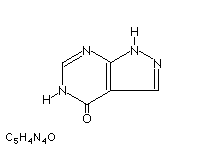
Allopurinol is isomer of hypoxanthine, a purine. An alternative to increasing uric acid excretion in the treatment of gout is to reduce its synhtesis by inhibiting xanthine oxidase with it. It reduces elevated blood uric acid levels caused by certain conditions such as those associated with malignancies or in kidney diseases.
Primary Characteristics
It is of Synthetic origin and belongs to Pyrazolol.
It is also classified under Analgesics and Anti-inflammatory Agents .
Molecular Weight: 136.1 · pKa: 10.2 · Solubility in Water: > 1 in 10000 · Solubility in Alcohol: > 1 in 10000 · Non-proprietary name: Allopurinol.
Pharmacokinetics
Absorption: Allopurinol has an oral bioavailability is 78.5% (±11.5%).
Distribution: Allopurinol has a volume of distribution is 1.6 l/kg. plasma protein binding is < 5%.
Elimination: it is metabolised via 76%, plasma half-life is 1.2 hr, renal excretion is 80%.
Advertisement
Indications
Allopurinol is primarily indicated in conditions like Acute uric acid nephropathy, Calcium oxalate/ phosphate renal stones, Hypothyroidism (myxoedema), Idiopathic gout, Myeloproliferative disorders, Neoplastic disease, Uric acid lithiasis.
Contraindications
None recorded.
Dosage
Allopurinol's dosage details are as follows:
| Dose | Single Dose | Frequency | Route | Instructions |
|---|---|---|---|---|
| Adult Dosage | ||||
| 150 mg | 150 mg | Every 24h | PO | This is the dose for mild condition. |
| 150 mg | 150 mg | — | PO | This is the dose for sever condition. Doses above 300mg/day should be given in divided doses. |
| 450 mg | 450 mg | — | PO | This is the dose for moderately sever condition; give in divided doses. |
| Paediatric Dosage (20kg) | ||||
| 15 mg/kg/day | 15 mg/kg/day | — | Oral | For under 15 years of age: maximum 400 mg/day in neoplastic condition, enzymes disorder. |
| Neonatal Dosage (3kg) | ||||
| 15 mg/kg | 15 mg/kg | Every 24h | oral | |
Drug Interactions
Always consult your physician for the change of dose regimen or an alternative drug of choice that may strictly be required.
Side Effects
Allopurinol in overdosage may give rise to further complications which include Granulomatous hepatitis .
Allopurinol produces potentially life-threatening effects which include Stevens Johnson syndrome, Eosinophilia , Stevens Johnson syndrome, Hepatitis , Lymphadenopathy, Interstitial nephritis. Careful monitoring is needed with proper medical management.
The signs and symptoms that are produced after acute overdosage of Allopurinol are GI intolerance .
Allopurinol is known to cause more or less tolerable side effects which are usually transient. These include Pruritus , Skin rashes.
Warnings / Precautions
Available Brands
Storage Conditions
Drug Classification
- 1.2.3 — Antigout preparations