
Actinomycin D
Also known as: Dactinomycin
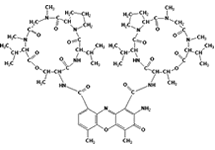
Actinomycin D is a highly toxic antibiotic with antineoplastic properties. Actinomycin D is isolated from Streptomyces chrysomallus and other species of Streptomyces. It contains two cyclic polypeptide that are linked by a chromophore moiety. Actinomycin D is effective in the treatment of different cancers to slow or stop the growth of cancerous or abnormal cells. Actinomycin D is used in combination owith different anticancerous drugs to obtain best therapeutic results and to reduce toxicity or side effects. It also has immunosuppressant properties.
Primary Characteristics
Actinomycin D is also known as Dactinomycin.
It is of Semi Synthetic origin and belongs to Phenoxazone.
It belongs to Intercalation (DNA acting) pharmacological group on the basis of mechanism of action and also classified in Antineoplastic Agent, Antibiotic pharmacological group. It is also classified under Chemotherapeutic Regimens .
Molecular Weight: 1255.4 · pKa: 11.90 · Solubility in Water: > 1 in 30 · Solubility in Alcohol: > 1 in 10 · Non-proprietary name: Actinomycin D.
Pharmacokinetics
Absorption: Actinomycin D has an oral bioavailability is 2.5% (±2.5%).
Distribution: Actinomycin D has a volume of distribution is 12.
Elimination: it is metabolised via 1-4%, plasma half-life is 36 hr, renal excretion is 20%.
Advertisement
Indications
Actinomycin D is primarily indicated in conditions like Choriocarcinoma, Ovarian teratoma, Rhabdomyosarcoma, Testicular teratoma, Wilms tumor.
Actinomycin D is also indicated for secondary conditions like Ewing's sarcoma, Neuroblastoma.
Contraindications
Actinomycin D is contraindicated in conditions like Chickenpox infection, Anaphylactic reactions.
Dosage
Actinomycin D's dosage details are as follows:
| Dose | Single Dose | Frequency | Route | Instructions |
|---|---|---|---|---|
| Adult Dosage | ||||
| 12 – 12 mcg/Kg/day | — | — | IV-inf | For 5 days as a single agent |
| 0.75 mg/m2 | 0.75 mg/m2 | Every 24h | IV-inf | For 5 days. repeated every 3 weeks. |
| Paediatric Dosage (20kg) | ||||
| 0.015 mg/kg | 0.015 mg/kg | Every 24h | Intravenous | For 1 to 5 days |
| Neonatal Dosage (3kg) | ||||
| 0 – 0 | — | — | Not used in this age group | |
Drug Interactions
Always consult your physician for the change of dose regimen or an alternative drug of choice that may strictly be required.
Side Effects
Actinomycin D in overdosage may give rise to further complications which include Radiosensitization effect on thorax, Skin inflammation, Esophageal inflammation.
Actinomycin D produces potentially life-threatening effects which include Bone marrow suppression, Neutropenic fever, Anaphylactic reactions. Careful monitoring is needed with proper medical management.
The signs and symptoms that are produced after acute overdosage of Actinomycin D are Diarrhea, Mucositis, Severe myelosuppression, Severe vomiting.
Actinomycin D is known to cause more or less tolerable side effects which are usually transient. These include Abdominal pain, Alopecia, Diarrhea, Fever, Hypocalcemia, Mucositis, Myalgia, Nausea, Reaction at injection site, Vomiting .
Warnings / Precautions
Interference in Pathology
Actinomycin D may interfere in the diagnosis of Bioassay procedures for determination of antibacterial drug levels. .
Available Brands
Click on a strength to view available brands.
Single Ingredient
Storage Conditions
Drug Classification
- 1.8.2 — Cytotoxic (anti-neoplastic) drugs