
Epoprostenol (Na)
During cardiac bypass procedures and charcoal hemoperfusion, Epoprostenol (Na) is used to preserve the platelet function. It may be used as an anticoagulant, as an alternative to heparin in renal dialysis.
Primary Characteristics
It is of Natural origin and belongs to Arachidonic Acid.
It belongs to PGI-II agonsit pharmacological group on the basis of mechanism of action and also classified in Prostaglandin pharmacological group. It is also classified under Sex Hormones .
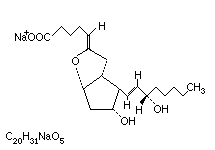
Molecular Weight: 374.5 · Solubility in Water: soluble but unstable · Non-proprietary name: Epoprostenol (Na).
Pharmacokinetics
Distribution: Epoprostenol (Na) has a plasma protein binding is not determined.
Elimination: it is metabolised via extensive by liver, plasma half-life is < 1.5 min, renal excretion is major.
Advertisement
Indications
Epoprostenol (Na) is primarily indicated in conditions like Adult respiratory distress syndrome (ards), Coronary artery disease, Heart failure, Peripheral vascular disease, Primary pulmonary hypertension, Raynaud's phenomenon.
Contraindications
Epoprostenol (Na) is contraindicated in conditions like Hemorrhagic diathesis.
Dosage
Epoprostenol (Na)'s dosage details are as follows:
| Dose | Single Dose | Frequency | Route | Instructions |
|---|---|---|---|---|
| Adult Dosage | ||||
| 2.25 ng/kg.min | 2.25 ng/kg.min | — | IV Inf | As Required |
| Paediatric Dosage (20kg) | ||||
| No data. | ||||
| Neonatal Dosage (3kg) | ||||
| No data. | ||||
Drug Interactions
None recorded.
Side Effects
Epoprostenol (Na) produces potentially life-threatening effects which include Bradycardia , Low cardiac output, Vaso-vagal attacks, Severe hypertension. Careful monitoring is needed with proper medical management.
The signs and symptoms that are produced after acute overdosage of Epoprostenol (Na) are Headache, Severe flushing, Abdominal cramps, Hypotension, Nausea, Vomiting.
Epoprostenol (Na) is known to cause more or less tolerable side effects which are usually transient. These include Abdominal colic, Flushing, Headache, Nausea, Vomiting .
Warnings / Precautions
Interference in Pathology
Epoprostenol (Na) may interfere in the diagnosis of Increased Alkaline Phosphatase , Liver Function Test (LFT) , Increased level of alanine aminotransferase, Increased level of Blood urea nitrogen (BUN) concentrations, Increased in serum creatinin.
Available Brands
None recorded.
Storage Conditions
Drug Classification
- 1.20 — Muscle relaxants and cholinesterase inhibitors