
Droperidol
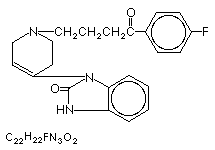
Droperidol is a drug of the butyrophenone series. Droperidol is used for its antianxiety, sedative, tranquilizer and antiemetic effects. Droperidol is a component of neuroleptic anesthesia. Droperidol is used in surgical and diagnostic procedures for its calming effect. It decreases anxiety and pain, reduces nausea and vomiting induced by cancer chemotherapy and may be effective during labor and delivery. Droperidol is administered intramuscularly or intravenously.
Primary Characteristics
Droperidol is also known as Dehydrobenzoeridol.
It is of Synthetic origin and belongs to Butyrophenone.
It belongs to D2 antagonist pharmacological group on the basis of mechanism of action. It is also classified under Psychotherapeutic Drugs .
Molecular Weight: 379.4 · pKa: 7.6 · Solubility in Water: < 1 in 10000 · Solubility in Alcohol: 1 in 140 · Non-proprietary name: Droperidol.
Pharmacokinetics
Distribution: Droperidol has a volume of distribution is Children:- 0.6L/kg,adult:- 1.5L/kg. plasma protein binding is 85% to 90%.
Elimination: it is metabolised via extensive by liver, plasma half-life is 2.3 hr, renal excretion is 75% <1% as unchanged drug.
Advertisement
Indications
Droperidol is primarily indicated in conditions like Aggression, Anxiety, General anaesthesia, Hyperactivity, Hyperemesis gravidarum, Nausea and vomiting, Regional anaesthesia, Schizophrenia.
Droperidol is also indicated for secondary conditions like Induction, Induction and maintenance of anaesthesia, Sedation, Surgical anaesthesia.
Contraindications
Droperidol is contraindicated in conditions like Parkinson's disease, Comatose states.
Dosage
Droperidol's dosage details are as follows:
| Dose | Single Dose | Frequency | Route | Instructions |
|---|---|---|---|---|
| Adult Dosage | ||||
| 0.143 mg/kg | 0.143 mg/kg | — | IV | As Required |
| 0.937 mg | 0.937 mg | — | IV | At the end of surgery recommended prophyledic doses of antiemetic for PONV. |
| 60 mg/kg | 60 mg/kg | — | IV | At the end of surfery recommended for prophylactic doses of antiemetics for PONV. |
| Paediatric Dosage (20kg) | ||||
| 0.3 mg/kg | 0.3 mg/kg | — | Intra Muscular | Single Dose |
| 50 – 70 mg/kg | — | — | Iv | At the end of surfery recommended for prophylactic doses of antiemetics for PONV. |
| 0.3 mg/kg | 0.3 mg/kg | — | Oral | Single Dose |
| Neonatal Dosage (3kg) | ||||
| 0.3 mg/kg | 0.3 mg/kg | — | Intra Muscular | Single Dose |
| 0.3 mg/kg | 0.3 mg/kg | — | Oral | Single Dose |
Drug Interactions
Always consult your physician for the change of dose regimen or an alternative drug of choice that may strictly be required.
Side Effects
Droperidol in overdosage may give rise to further complications which include Tardive dyskinesia , Oculogyric crises , Laryngeal dystonias, Cardiac arrest , Acute dystonia .
Droperidol produces potentially life-threatening effects which include Arrhythmias, Neuroleptic Malignant Syndrome , Neuroleptic malignant syndrome. Careful monitoring is needed with proper medical management.
The signs and symptoms that are produced after acute overdosage of Droperidol are Hypotension, Cardiac arrhythmias, Convulsions , Coma, Respiratory depression, Respiratory depression, Sedation , Extrapyramidal effects , Respiratory depression.
Droperidol is known to cause more or less tolerable side effects which are usually transient. These include Akathisia, Alertness impairment, Blood dyscrasias, dizziness, Dystonic reactions, Extrapyramidal effects, Galactorrhea, Gynecomastia, Headache, HyperprolactinemiaX, Hypotension , Oligomenorrhea, Paradoxical effects, Sedation .
Warnings / Precautions
Available Brands
None recorded.
Storage Conditions
Drug Classification
- 1.24.1 — Drugs used in psychotic disorders