
Diazoxide
Diazoxide is antihypertensive agent. Diazoxide is a relatively long acting parentrally administerd vasodilator. Diazoxide is useful in hypertensive emergencies to lower the blood pressure and to increase blood sugar level in hypoglycemia.
Primary Characteristics
It is of Synthetic origin and belongs to Benzothiadiazine.
It belongs to Potassium Channel (ATP sensitive) opener pharmacological group on the basis of mechanism of action and also classified in Vasodilators pharmacological group.
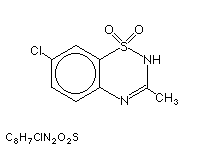
Molecular Weight: 230.7 · pKa: 8.5 · Solubility in Water: insoluble · Solubility in Alcohol: slightly soluble · Non-proprietary name: Diazoxide.
Pharmacokinetics
Absorption: Diazoxide has an oral bioavailability is 90% (±5%).
Distribution: Diazoxide has a volume of distribution is 0.2 l/kg. plasma protein binding is 90%.
Elimination: it is metabolised via Hepatic, plasma half-life is 28 ± 8.3 hr, renal excretion is major.
Advertisement
Indications
Diazoxide is primarily indicated in conditions like Carbohydrate depletion, Dehydration, Duodenal ulceration associated with H. Pylori, Fluid depletion, Hypertensive emergencies, Hypertensive encephalopathy, Hypoglycaemia.
Diazoxide is also indicated for secondary conditions like Cerebral oedema, Reflux oesophagitis, Schizophrenia and other psychoses, Varicose veins.
Contraindications
Diazoxide is contraindicated in conditions like Diabetes mellitus, Anuria, Thiamine deficiency, Trauma, Intracranial hemorrhage, Sepsis, Hypophosphataemia, Haemodilution, Acute ischaemic stroke.
Dosage
Diazoxide's dosage details are as follows:
| Dose | Single Dose | Frequency | Route | Instructions |
|---|---|---|---|---|
| Adult Dosage | ||||
| 1 – 3 mg/kg | — | Every 24h | For hypersensitive crises:- Given with in seconds upto a maximum dose of 150mg & repeated after 5 to 15 minutes if required. | |
| 3 – 5 mg/kg | — | Every 24h | For hypoglycemia:- Initial dose in 2 to 3 divided doses . | |
| 5.5 mg/kg | 5.5 mg/kg | Every 24h | For hypoglycemia:- Maintainance dose up to 7g. | |
| Paediatric Dosage (20kg) | ||||
| No data. | ||||
| Neonatal Dosage (3kg) | ||||
| No data. | ||||
Drug Interactions
Always consult your physician for the change of dose regimen or an alternative drug of choice that may strictly be required.
Side Effects
Diazoxide in overdosage may give rise to further complications which include Tachycardia , Rashes, Fever , Thrombocytopenia , Pancreatitis , Lymphadenopathy , Lymphadenopathy , Neutropenia , Palpitation , Gout , Hepatorenal changes , Chest pain .
Diazoxide produces potentially life-threatening effects which include Congestive heart failure, Hypotension, Hyperosmolar non-ketotic diabetic coma , Diabetic ketoacidosis, Sodium retention, Water retention. Careful monitoring is needed with proper medical management.
The signs and symptoms that are produced after acute overdosage of Diazoxide are Hyperglycemia, Ketoacidosis .
Diazoxide is known to cause more or less tolerable side effects which are usually transient. These include Abdominal pain, Constipation , Dizziness, Dysgeusia, Flushing, Headache, Hirsutism , Loss of taste, Nausea, Palpitation, Pruritus , Reaction at injection site, Restlessness, Transient cataract, Tremor, Vomiting , Weakness.
Warnings / Precautions
Interference in Pathology
Diazoxide may interfere in the diagnosis of Fluorimetric Methods of measuring Cortisol in Urine .
Available Brands
None recorded.
Storage Conditions
Drug Classification
- 1.12.3.7 — Direct vasodilators