
Moricizine (HCl)
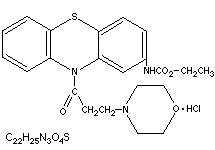
Moricizine (HCl) is an oral class I antiarrhythmic agent, chemically unrelated to any other antiarrhythmic drugs. Classification of moricizine within the group of class I antiarrhythmics is difficult since the drug has features of all three subclasses, class Ia, Ib, and Ic. Although chemically related to phenothiazines, moricizine has no central or peripheral dopamine blocking activity.Moricizine (HCl) is reserved for the treatment of life-threatening ventricular arrhythmias. Moricizine was originally synthesized in the Soviet Union in 1964 and has been in use there since 1971. Moricizine was FDA approved on June 19, 1990. Moricizine (HCl) is currently only available as oral tablets.
Primary Characteristics
It is of Synthetic origin and belongs to Phenothiazine Derivative.
Molecular Weight: 464 · Solubility in Water: freely · Solubility in Alcohol: soluble · Non-proprietary name: Moricizine (HCl).
Pharmacokinetics
Absorption: Moricizine (HCl) has an oral bioavailability is 47.5% (±47.5%), pre-systemic (first-pass) metabolism accounts for 64% (±2%).
Distribution: Moricizine (HCl) has a volume of distribution is 8.3 - 11.1 l/Kg. plasma protein binding is 81-95%.
Elimination: plasma half-life is 2.5 hr, renal excretion is 39% (0.05% unchanged).
Advertisement
Indications
Moricizine (HCl) is primarily indicated in conditions like Atrial arrhythmias, Ventricular arrhythmias.
Contraindications
Moricizine (HCl) is contraindicated in conditions like Cardiogenic shock, Sick sinus syndrome, Second or third degree A-V block, Hypersensitivity.
Dosage
Moricizine (HCl)'s dosage details are as follows:
| Dose | Single Dose | Frequency | Route | Instructions |
|---|---|---|---|---|
| Adult Dosage | ||||
| 750 mg | 750 mg | Every 3h | Oral | Daily in 3 divided doses adjusted by steps of 150mg daily at intervals of 3 drops. |
| Paediatric Dosage (20kg) | ||||
| No data. | ||||
| Neonatal Dosage (3kg) | ||||
| No data. | ||||
Drug Interactions
Always consult your physician for the change of dose regimen or an alternative drug of choice that may strictly be required.
Side Effects
Moricizine (HCl) in overdosage may give rise to further complications which include Respiratory depression , Seizures , Sinus bradycardia .
Moricizine (HCl) produces potentially life-threatening effects which include Ventricular arrhythmias, Pro-arrhythmiagenicity, Elevated creatine phosphokinase ESR. Careful monitoring is needed with proper medical management.
The signs and symptoms that are produced after acute overdosage of Moricizine (HCl) are Cardiac arrhythmias.
Moricizine (HCl) is known to cause more or less tolerable side effects which are usually transient. These include Abdominal pain, Anxiety, Blurred vision, Confusion, Constipation , Diarrhea, Dizziness, Drowsiness, Dry mouth, Dyspepsia , Dyspnea, Fatigue, Fever, Headache, Musculoskeletal pain , Nausea, Palpitation, Paresthesias, Postural dizziness, Restlessness, Sleep disturbance, Tremor, Vomiting , Weakness.
Warnings / Precautions
Available Brands
None recorded.
Storage Conditions
Drug Classification
- 1.12.2 — Antiarrhythmic drugs