
Hydromorphone
Also known as: Phennathrene
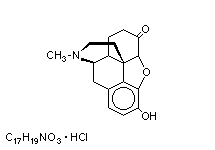
Hydromorphone is in a group of drugs called narcotic pain relievers. Hydromorphone (HCl) is a phenantherne derivative with agonist activity on opiate receptors. Hydromorphone (HCl) is a, semisynthetic analog of morphine, but more potent than morphine. Due to its potency, Hydromorphone (HCl) is often used to relieve severe pain in cancer patients, although its short duration of action can limit its utility. Although all opiates can potentially suppress the cough reflex, hydromorphone is rarely used for this purpose. The drug is available for oral use as well as for parenteral administration. Hydromorphone is a schedule C-II controlled substance and was approved by the FDA in 1984.
Primary Characteristics
Hydromorphone is also known as Phennathrene, Hydromorphone (HCl).
It is of Semi Synthetic origin and belongs to Morphine.
Molecular Weight: 321.8 · pKa: 8.08, 9.47 · Solubility in Water: Freely soluble · Solubility in Alcohol: very slightly soluble · Non-proprietary name: Hydromorphone.
Pharmacokinetics
Absorption: Hydromorphone has an oral bioavailability is 25% (±25%).
Distribution: Hydromorphone has a volume of distribution is 24.4 litre. plasma protein binding is 7.1%.
Elimination: it is metabolised via hepatic (gulcronidation), plasma half-life is 2.4(1.8-3), renal excretion is 6 % unchanged.
Advertisement
Indications
Hydromorphone is primarily indicated in conditions like Biliary colic, Bone trauma, Burns, Cough, Cough suppressant, Non productive cough, Pain, Pain management in cancer patient, Post operative analgesia, Renal colic.
Contraindications
Hydromorphone is contraindicated in conditions like Hypovolaemia, Hypotension, Respiratory insufficiency, Hypersensitivity.
Dosage
Hydromorphone's dosage details are as follows:
| Dose | Single Dose | Frequency | Route | Instructions |
|---|---|---|---|---|
| Adult Dosage | ||||
| 1.5 mg | 1.5 mg | Every 6h | IM/SC | For analgesia (increased to 3 to 4mg every 6-8 hour if pain is severe.) |
| 6.25 ml | 6.25 ml | Every 6h | PO | |
| 3 mg | 3 mg | Every 4h | Suppoitory | For analgesia |
| Paediatric Dosage (20kg) | ||||
| 0.5 mg | 0.5 mg | Every 6h | PO | Child 6-12 year for non productive cough |
| Neonatal Dosage (3kg) | ||||
| No data. | ||||
Drug Interactions
Always consult your physician for the change of dose regimen or an alternative drug of choice that may strictly be required.
Side Effects
Hydromorphone in overdosage may give rise to further complications which include Insomnia , Seizures , Respiratory depression , Constipation .
Hydromorphone produces potentially life-threatening effects which include Respiratory depression, Respiratory arrest, Cardiac Arrest , Cardiac arrest, Shock , Circulatory depression. Careful monitoring is needed with proper medical management.
The signs and symptoms that are produced after acute overdosage of Hydromorphone are Drowsiness, Drowsiness, Confusion , Fainting , Pinpoint pupils, Shallow breathing, Death due to respiratory depression.
Hydromorphone is known to cause more or less tolerable side effects which are usually transient. These include Agitation , Blurred vision, Confusion, Constipation , Dizziness, Drowsiness, Dry mouth, Headache, Nausea, Paresthesias, Restlessness, Sedation , Sweating , Uretheral spasm, Vertigo, Vomiting .
Warnings / Precautions
Available Brands
None recorded.
Storage Conditions
Drug Classification
- 1.2.2 — Opioid analgesics