
Ethyl Chloride
Also known as: Monochlorethane, Hydrochloric ether, Ethylis chloridum
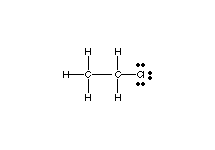
Ethyl chloride is a colourless and extremely volatile liquid. Formerly it was used as an inhalaitonal anesthetic, but now Ethyl Chloride is used as a local anesthetic.
Primary Characteristics
Ethyl Chloride is also known as Monochlorethane, Hydrochloric ether, Ethylis chloridum.
It is of Synthetic origin and belongs to Chloroethane.
Molecular Weight: 64.51 · Solubility in Water: slightly soluble · Solubility in Alcohol: misible · Non-proprietary name: Ethyl Chloride.
Pharmacokinetics
Absorption: Ethyl Chloride has an pre-systemic (first-pass) metabolism accounts for 5% (±5%).
Advertisement
Indications
Ethyl Chloride is primarily indicated in conditions like Local anaesthesia.
Ethyl Chloride is also indicated for secondary conditions like Regional anaesthesia.
Contraindications
Ethyl Chloride is contraindicated in conditions like Hypersensitivity to the drug.
Dosage
None recorded.
Drug Interactions
None recorded.
Side Effects
Ethyl Chloride in overdosage may give rise to further complications which include Prolonged spraying on to the skin can cause chemical Frostbite.
Ethyl Chloride produces potentially life-threatening effects which include Severe allergic reactions, Decreased Urination. Careful monitoring is needed with proper medical management.
The signs and symptoms that are produced after acute overdosage of Ethyl Chloride are Rashes , Hives, difficulty in breathing.
Ethyl Chloride is known to cause more or less tolerable side effects which are usually transient. These include Burning, Contact dermatitis, Cutaneous lesions, Edema, Sloughing, Stinging, Tenderness , Urticaria.
Warnings / Precautions
Available Brands
None recorded.
Storage Conditions
Drug Classification
- 1.1.1.2 — Inhalational anesthetics