
Glimepiride
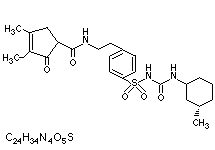
Glimepiride is oral hypoglycemic agent. It belongs to sulfonylurea class. Glimepiride is chemically identidied as 1-p-2-(3-ethyl-4-methyl-2-oxo-3 pyrroline-1-carboxamido) ethyl-phenylsulfonyl-3-(trans-4-methylcyclohexyl) urea. It was approved by the Food and Drug Administration in 1995 as an adjunct to diet and exercise to lower the blood glucose in patients with type 2 diabetes whose hyperglycemia cannot be controlled by diet and exercise alone.
Primary Characteristics
It is of Synthetic origin and belongs to Sulphonyl Urea.
It belongs to Potassium Channel (ATP sensitive) antagonist pharmacological group on the basis of mechanism of action and also classified in Antidiabetic Agent, Sulfonylurea pharmacological group.
Molecular Weight: 490.6 · Solubility in Water: Insoluble · Solubility in Alcohol: Very Slightly soluble · Non-proprietary name: Glimepiride.
Pharmacokinetics
Absorption: Glimepiride has an oral bioavailability is 50% (±50%).
Distribution: Glimepiride has a volume of distribution is 8.8 litre. plasma protein binding is > 99.5 %.
Elimination: it is metabolised via Hepatfc, plasma half-life is 9 hr, renal excretion is 60 %.
Advertisement
Indications
Glimepiride is primarily indicated in conditions like NIDDM.
Contraindications
Glimepiride is contraindicated in conditions like Diabetic ketoacidosis.
Dosage
Glimepiride's dosage details are as follows:
| Dose | Single Dose | Frequency | Route | Instructions |
|---|---|---|---|---|
| Adult Dosage | ||||
| 1.5 mg | 1.5 mg | Every 24h | PO | Initial |
| 4 mg | 4 mg | Every 24h | PO | Maintenance |
| Paediatric Dosage (20kg) | ||||
| 0 – 0 | — | — | — | Not Recommended in this Age Group |
| Neonatal Dosage (3kg) | ||||
| 0 – 0 | — | — | Not recommended in this age group | |
Drug Interactions
Always consult your physician for the change of dose regimen or an alternative drug of choice that may strictly be required.
Side Effects
Glimepiride in overdosage may give rise to further complications which include Thrombocytopenia , Jaundice , Jaundice , Hepatitus, Haumolytic anaemia.
Glimepiride is known to cause more or less tolerable side effects which are usually transient. These include Anorexia , Diarrhea, Edema, Epigastric discomfort, Headache, Hypoglycemia, Hyponatremia, Nausea and vomiting, Photosensitivity, Rashes , Urticaria.
Warnings / Precautions
Available Brands
Storage Conditions
Drug Classification
- 1.18.7.2 — Oral hypoglycemics
Manufacturers
Manufacturers of Glimepiride in Pakistan: