
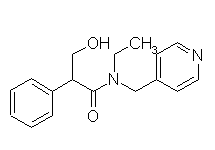
Tropicamide
Also known as: Bistropamide
Tropicamide is anticholinergic agent, used to induce mydriasis (dilate the pupil) and cycloplegia in opthalmologic practice, or to treat certain eye conditions.
Primary Characteristics
Tropicamide is also known as Bistropamide.
It belongs to Tertiary Amine.
It belongs to Cholinergic muscarinic antagonist pharmacological group on the basis of mechanism of action and also classified in Opthalmic Agent, Mydriatic pharmacological group.
Molecular Weight: 284.4 · Solubility in Water: soluble · Solubility in Alcohol: freely soluble · Non-proprietary name: Tropicamide.
Pharmacokinetics
Distribution: Tropicamide has a plasma protein binding is 45%.
Advertisement
Indications
Tropicamide is primarily indicated in conditions like Duodenal ulcer associated with h. Pylori, Iridocyclitis, Iritis, Keratosis.
Tropicamide is also indicated for secondary conditions like Surgery.
Contraindications
Tropicamide is contraindicated in conditions like Glucoma.
Dosage
Tropicamide's dosage details are as follows:
| Dose | Single Dose | Frequency | Route | Instructions |
|---|---|---|---|---|
| Adult Dosage | ||||
| 0.75 % | 0.75 % | — | Ophthalmic | As Required.To be given as drops. |
| Paediatric Dosage (20kg) | ||||
| 0.75 mg | 0.75 mg | — | Opthalmic | As Required |
| Neonatal Dosage (3kg) | ||||
| No data. | ||||
Drug Interactions
Always consult your physician for the change of dose regimen or an alternative drug of choice that may strictly be required.
Side Effects
Tropicamide in overdosage may give rise to further complications which include Increased IOP (intraocular pressure).
Tropicamide is known to cause more or less tolerable side effects which are usually transient. These include Blurred vision, Dermatitis, Drowsiness, Eczematous rash, Headache, Xerostomia .
Warnings / Precautions
Available Brands
Click on a strength to view available brands.
Single Ingredient
Storage Conditions
Drug Classification
- 1.14.1 — Ophthalmic drugs
- 2.21.5 — Mydriatics, Cycloplegics