
Metformin (HCl)
Metformin (HCl)
Overview
Category:
- 18 Hormones and other endocrine drugs and contraceptives
- 18.7 Antidiabetics
- 18.7.2 Oral hypoglycemics
Primary Characterstics
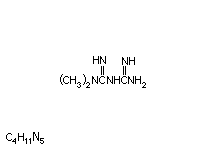 |
Pharmacokinetics
Indications
Metformin (HCl) is primarily indicated in conditions like Diabetes mellitus,Hyperlipoproteinaemia, Insulin dependent diabetes mellitus, Insulin resistance, Non-insulin dependent diabetes mellitus, Obesity.
Contraindications
Metformin (HCl) is contraindicated in conditions like Alcohol dependence,Anaemia,Myocardial infarction,Septicaemia,Infections,Respiratory disease,Ketosis,Cardiovascular disease,Diabetic coma,Trauma,Liver damage,Iron deficiency,Vitamin B12 deficiency,Renal impairment,Diabetic retinopathy.
Drug Interactions
Metformin (HCl) is known to interact with other drugs, the details of drug interactions is as follows:
| Drug | Details | Severity | Onset | Management |
|---|---|---|---|---|
| Acarbose | Acarbose and guar gum both decrease the absorption of metformin. | |||
| Alcohol | Ethanol initiate effects of metformin on lactate metabolism. | Moderate | Avoid intake of alcohol and notify the signs of lactic acidosis like malaise,respiratory distress,somnolence and irregular heart beat. | |
| Amiloride (HCl) | Amiloride compete with metformin for renal tubular transport thus decreases excretion of metformin leads risk of lactic acidosis. | Moderate | Monitor patient glucose level and adjust metformin dose. | |
| Atenolol | Atenolol enhance the hypoglycemic effect of metformin. | Moderate | Monitoring of patient blood glucose level should be done when these drugs are coadministered. | |
| Chlorpromazine (HCl) | Chlorpromazine decreases the hypoglycemic effect of metformin by interfering with blood glucose control. | Moderate | Closely monitor the blood glucose level. Adjust the dose of metformin accordingly. | |
| Cimetidine (HCl) | Cimetidine decreases the renal tubular secretion of metformin result in increased AUC upto 50% and decreases the plasma clearence upto 27% reult in increased plasma level may lead to lactic acidosis. | Moderate | Slowly reduce the dose of metformin. Monitor thr blood glucose level regularly. Patient should notify to physician if experience any sign of lactic acidosis. | |
| Digoxin | Digoxin decreases the excretion of metformin by competing the renal tubular transport. | Moderate | Dose of metformin should be reduced. | |
| Dolutegravir | dolutegravir may increased the level of metformin | close monitoring and dose adjustment recommended | ||
| Frusemide or Furosemide | Furosemide increases the plasma concentration while mwtformin decreases the peak concentration and elimination half life upto 31%and 32%respectively. Increase plasma level of metformin increases the risk of lactic acidosis. | Moderate | Closely monitor blood glucose level Patient should notify to physician if experience signs of lactic acidosis | |
| Glibenclamide | ||||
| Hydrochlorothiazide | Thiazide (hydrochlorothiazide) antagonize the effect of metformin. | |||
| Insulin Aspart | Metformin potentiate the hypoglycemic effect of insulin by increasing cellular mechanism controlled by insulin. | Moderate | Closely monitor the development of hypoglycaemia in patient. | |
| Ioxaglate | Administration of intravascular iodinated radiocontrast media in patients treated with biguanides such as metformin may precipitate lactic acidosis, a rare but potentially serious and fatal complication of biguanide therapy. Iodinated contrast material can cause acute alterations in renal function, including acute renal failure, which is a known risk factor for biguanide-induced lactic acidosis. | Major | Biguanide therapy should be temporarily discontinued at the time of, or prior to, radiographic studies involving intravascular administration of iodinated contrast media, and not resumed until at least 48 hours after the procedure and renal function has been re-evaluated and determined to be normal. | |
| Isoniazid | Isoniazid decreases the hypoglycemic effect of metformin by interfering with blood glucose control. | Moderate | Closely monitor the blood glucose level. Adjust the dose of metformin accordingly. | |
| Metoprolol (Tartrate) | Metoprolol increases the hypoglycemic effect by inhibiting hepatic glycogenolysis and insulin secretion. | Moderate | Closely monitor the blood glucose level on regular basis. | |
| Nifedipine | Nifedipine increases the bioavailability of metformin by increasing its absorption thus increases the risk of lactic acidosis. | Moderate | Closely monitor the blood glucose level of patient. Patient should notify the sign of lactic acidosis to physician. | |
| Phenprocoumon | Metformin increases elimination of phenprocoumon. | |||
| Porcine Insulin | ||||
| Procainamide (HCl) | Procainamide reduces the excretion of metformin by competing for renal tubular transport results in increased level of metforminmay lead to lactic acidosis. | Moderate | Slowly reduce the dose of metformin. Closely monitor the blood glucose level. Patient should notify to physician if experience signs of lactic acidosis. | |
| Propranolol (HCl) | propranolol increases the hypoglycemic effect by inhibiting hepatic glycogenolysis and insulin secretion. | Moderate | Closely monitor the blood glucose level on regular basis. | |
| Quinidine | Quinidine reduces the excretion of metformin by competing for renal tubular transport results in increased level of metformin may lead to lactic acidosis. | Moderate | Slowly reduce the dose of metformin. Closely monitor the blood glucose level. Patient should notify to physician if experience signs of lactic acidosis. | |
| Ranitidine | Ranitidine reduces the excretion of metformin by competing for renal tubular transport results in increased level of metformin may lead to lactic acidosis. | Moderate | Slowly reduce the dose of metformin. Closely monitor the blood glucose level. Patient should notify to physician if experience signs of lactic acidosis. | |
| Thiamine HCl (Vitamin B1) | Metformin (HCl) may reduce thiamine activity. | |||
| Tolbutamide | ||||
| Triamterene | Triamterene reduces the excretion of metformin by competing for renal tubular transport results in increased level of metformin may lead to lactic acidosis. | Moderate | Slowly reduce the dose of metformin. Closely monitor the blood glucose level. Patient should notify to physician if experience signs of lactic acidosis. | |
| Trimethoprim | Trimethoprim reduces the excretion of metformin by competing for renal tubular transport results in increased level of metformin may lead to lactic acidosis. | Moderate | Slowly reduce the dose of metformin. Closely monitor the blood glucose level. Patient should notify to physician if experience signs of lactic acidosis. | |
| Vancomycin (HCl) | Vancomycin reduces the excretion of metformin by competing renal tubular transport results in increased level of metformin may lead to lactic acidosis. | Moderate | Slowly reduce the dose of metformin. Closely monitor the blood glucose level. Patient should notify to physician if experience signs of lactic acidosis. | |
| Vandetanib | Vandetanib is an inhibitor of organic cation transporter 2 and metformin is a substrate of OCT2. Therefore Vandetanib decrease the elimination of metformin. | Requires dose adjustment of metformin. |
These interactions are sometimes beneficial and sometimes may pose threats to life. Always consult your physician for the change of dose regimen or an alternative drug of choice that may strictly be required.
Interference in Pathology
- Serum test for Creatinine and Glucose
Side Effects
The severe or irreversible adverse effects of Metformin (HCl), which give rise to further complications include Vasculitis, Pneumonitis, Malabsorption of vit B12, Malabsorpton of folic acid, Megaloblastic anemia, Hypoglycemia.
Metformin (HCl) produces potentially life-threatening effects which include Lactic Acidosis. which are responsible for the discontinuation of Metformin (HCl) therapy.
The symptomatic adverse reactions produced by Metformin (HCl) are more or less tolerable and if they become severe, they can be treated symptomatically, these include Abdominal distension, Flatulence, Nausea, Vomiting, Anorexia, Diarrhea, Skin reactions, Weight LossX, Hypersensitivity, Metallic taste.
Available Brands
Click on the appropriate strength of the dosage form to view its available brands.
Single Ingredient
Tabs: 1 g, 1 gm, 100 mg, 250 mg, 500 mg, 750 mg, 850 mg,
Multi ingredient
Dosage
| Dose | Single Dose | Frequency | Route | Instructions |
|---|---|---|---|---|
Adult Dosage | ||||
| 500 to 3000 mg | 1800 (1750) | 12 hourly | PO | Frequency may be increased upto 3times/day, if needed. Gradually increase upto 2-3 g/day. |
Paedriatic Dosage ( 20 Kg. ) | ||||
| Not recommended for this age group | ||||
Neonatal Dosage ( 3 Kg. ) | ||||
| No data regarding the neonatal dosage details of Metformin (HCl) is available. | ||||
High Risk Groups
Drug should not be given to Paediatrics, Pregnant Mothers, Cardiac / Hypertensive Patients, patients suffering from Kidney dysfunction, patients suffering from Liver Malfunction, Geriatrics, and Neonates.
If prescribing authority justifies the benefits of the drug against the possible damages he/she should reevaluate them and consult the reference material and previous studies.
Warning / Precautions
Metformin should be used with caution in patients with pre-existing liver disease, kidney disease, heart trouble or if have any allergy, infections. Avoid excessive use of alcohol while taking this. It is not recommended for use during pregnancy and should be used only if clearly needed during lactation.
Storage Conditions
Tab
Store in a well closed container, Between 15°C-30°C. Protect from Moisture.
37 views